
Our most popular products
-
 Sold out
Studio-Home Set
Regular price From €499,00Regular priceUnit price per -
HSL Potter's Wheel Junior VI
Regular price €552,20Regular priceUnit price per -
HSL Professional Potter's Wheel T-45
Regular price From €1.693,93Regular priceUnit price per -
Lindemann Electric Pottery Wheel ETS550
Regular price From €1.695,00Regular priceUnit price per


Why is pottery still so popular today?
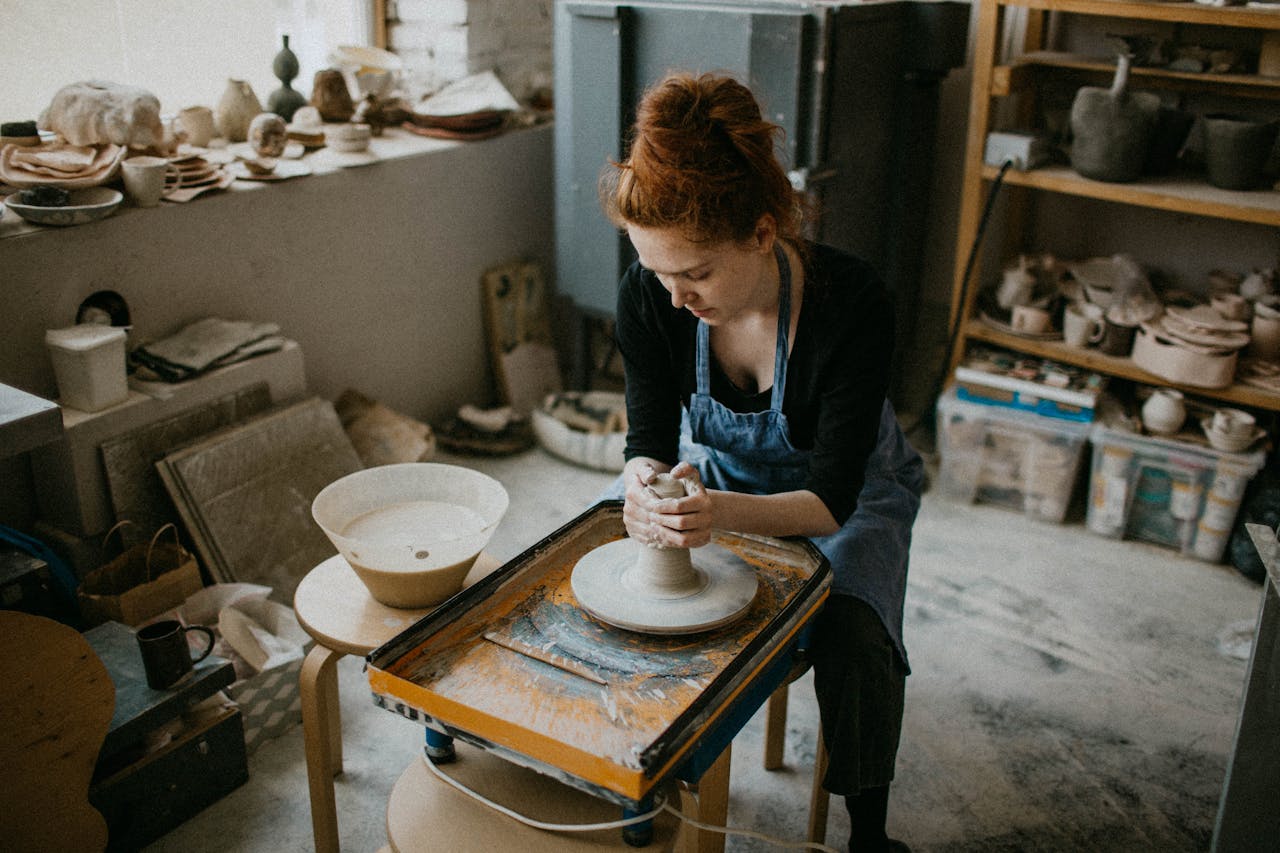
For many people, pottery has become a counterbalance to the fast pace of everyday life. Amidst overstimulation, screen time, and constant noise, clay offers something that has become rare: peace, focus, and a sense of authenticity.
As the clay is shaped, a direct connection is formed between hand, mind, and creativity. Pottery creates a space to switch off, but also to create. The result is always an object that remains – individual, personal, unique.
Voices of happy potters
-

"Feeling clay in my hands is pure relaxation for me, and every finished piece makes me proud." Helene from Berlin Friedrichshain
-

"It's fascinating how a lump of earth can be transformed into something you can use every day." Anna from Leipzig
-

"For me, pottery combines creativity and mindfulness – it's almost like a little break from everyday life." Markus from Berlin Moabit


To know
View all-

Töpfern in Berlin: Die große Karte der Berliner...
Die Berliner Keramikszene ist in den letzten Jahren rasant gewachsen. Vom familiären Hinterhof-Atelier bis zum großen Studio mit elf Drehscheiben findest du heute in jedem Bezirk mindestens eine Werkstatt. Wir...
Töpfern in Berlin: Die große Karte der Berliner...
Die Berliner Keramikszene ist in den letzten Jahren rasant gewachsen. Vom familiären Hinterhof-Atelier bis zum großen Studio mit elf Drehscheiben findest du heute in jedem Bezirk mindestens eine Werkstatt. Wir...
-

Wabi-Sabi in der Keramik: Warum unperfekte Stüc...
Eine leicht schief gedrehte Schale. Ein Fingerabdruck im Henkel. Ein Riss, der nicht entfernt, sondern mit Gold betont wird. Was im westlichen Denken oft als „misslungen" abgestempelt wird, ist in...
Wabi-Sabi in der Keramik: Warum unperfekte Stüc...
Eine leicht schief gedrehte Schale. Ein Fingerabdruck im Henkel. Ein Riss, der nicht entfernt, sondern mit Gold betont wird. Was im westlichen Denken oft als „misslungen" abgestempelt wird, ist in...
-

Kittec kiln lines explained
Table of contents Why the line is more important than the model How you work – typical application situations Overview: Kittec lines compared CB Classic-Line CBN Classic-Line SQ Squadro CT...
Kittec kiln lines explained
Table of contents Why the line is more important than the model How you work – typical application situations Overview: Kittec lines compared CB Classic-Line CBN Classic-Line SQ Squadro CT...


Frequently Asked Questions
What exactly do you do when making pottery?
In pottery, you shape clay into vessels, sculptures, or decorative objects. There are various techniques. You can shape the clay on a potter's wheel, build it up by hand, as in coil building, or roll out slabs and assemble them. Once the desired shape is complete, the pieces are left to dry, smoothed, and decorated.
After that, if you're working with ceramic clay, comes the firing in the kiln. First, the bisque firing, which hardens the clay, then the glaze firing, in which the color and glaze are fired on. This makes the ceramic waterproof and suitable for everyday use. Pottery is therefore not just about shaping, but also about creative design and experimentation.
Is pottery an expensive hobby?
Pottery can be very inexpensive or a bit more costly, depending on how you approach it. To get started, you don't necessarily need a potter's wheel or a kiln. Many beginners begin with air-dry clay and simple tools that only cost a few euros. However, as soon as you want to work with real clay and make your pieces more durable, you'll need access to a kiln. You can enroll in a course at an adult education center, an art studio, or a pottery workshop; there, you usually only pay the course fee and the cost of materials.
If you want to buy your own basic equipment, you should expect to spend around 50 to 150 euros on clay, glazes, and tools. A potter's wheel or even your own kiln are larger investments that are only worthwhile if you plan to pot regularly. The costs here can quickly reach 1,000 to 3,000 euros or even significantly more. Ultimately, pottery is as expensive as you want it to be; everything is possible, from a small hobby to a professional studio.
Is it possible to do pottery at home?
Yes, pottery at home is absolutely doable. Many hobby potters start at the kitchen table or in a small workshop corner. With air-drying clay, you can even work without a kiln; your pieces simply dry in the air. If you want to work with ceramic clay that needs to be fired, you can, for example, find a spot in a shared workshop or a pottery class to have your pieces fired there.
For home use, all you need is a stable surface, some tools, water, and clay. A potter's wheel is optional; many techniques, such as slab building or coil building, work perfectly well without one. This way, you can gradually determine how much space and equipment you actually need.
Is pottery difficult?
Pottery is quite manageable for beginners, but it does require some patience and practice. Even simple hand-building techniques can produce beautiful results. Working on the potter's wheel is considered more challenging, as it demands good hand-eye coordination and a feel for the clay. However, many find this learning process relaxing and meditative.
The beauty of it is that you don't have to create perfect vessels right away. Every little mistake can make a piece unique and special. With courses, online tutorials, or books, you can quickly learn the basics. After your first attempts, you'll soon realize how much fun it is to create something with your own hands.
Is pottery physically demanding?
Pottery can be physically demanding, especially when working at the wheel for extended periods or handling large quantities of clay. Kneading clay requires some strength in the hands and forearms (please take regular breaks to protect the tendons in your thumbs and wrists!), and you need to maintain a stable posture while throwing. Lifting and carrying packages of clay or fired pieces can also be tiring, as clay is quite heavy.
For beginners working on smaller projects, the workload is manageable. Many even find pottery relaxing because it promotes concentration and has an almost meditative effect. Over time, you also develop good technique, making the movements easier.
In short, it does require some physical effort, but pottery is not a strength sport. It's more of a craft that engages both body and mind.
Do I need a potter's wheel to start pottery?
No, you can easily get started with pottery without a potter's wheel. Beginners, in particular, often start with simple hand-building techniques like the bead technique (stacking clay snakes), the slab technique (assembling clay surfaces), or modeling figures. While a potter's wheel is exciting, it's not absolutely necessary—many ceramics, bowls, and vases can also be made by hand. As you delve deeper into the hobby, you can purchase a potter's wheel and learn how to throw clay.
Which tone is best for beginners?
For beginners, soft, malleable clay is ideal. Stoneware clay is particularly popular because it's easy to work with and becomes very stable after firing. Red clay is also well-suited because of its classic appearance and ease of shaping. Those without access to a kiln can use air-drying clay or oven-hardening clay (which can be hardened in a kitchen oven). These are perfect for gaining initial experience without having to invest in professional equipment.